
 + points earned!
Dressing with Ease: Adaptive Clothing for People with Mobility Challenges
- 30 October 2026
- Home Nursing Foundation, with contribution from Yen, caregiver of loved one with complex needs
How adaptive clothing can make everyday care gentler, smoother, safer and more dignified
In practice, the right clothing can do more than save time: it can reduce discomfort, preserve dignity and make caregiving feel less a struggle.
Getting dressed is usually such an ordinary part of the day that we do not give it much thought. But when a loved one becomes bedridden, uses a wheelchair, has weakness on one side of the body, experiences joint stiffness or lives with limited mobility, changing clothes can become a physically demanding task. A sleeve that is slightly too narrow may cause discomfort. A waistband may press into the skin when seated. Buttons that took seconds to fasten may suddenly become an impossible task. For older folks, this can lead to sprains and dislocations.
Traditional clothes assume that the person has a certain range of motion and flexibility, such as being able to wriggle into tight or stiff material, use small buttons, or reach behind to zip up the back of a shirt. But these actions can be difficult for seniors recovering from a stroke, managing cognitive decline due to dementia, or living with physical pain.
For seniors with dementia, caregivers also spend a significant amount of time helping with dressing, lifting limbs, adjusting clothes, and grooming. Rushing the process could make the senior feel anxious or overwhelmed. That’s why adaptive clothing can help caregivers like you and your loved ones make the dressing process smoother and more comforting.
What is adaptive clothing?
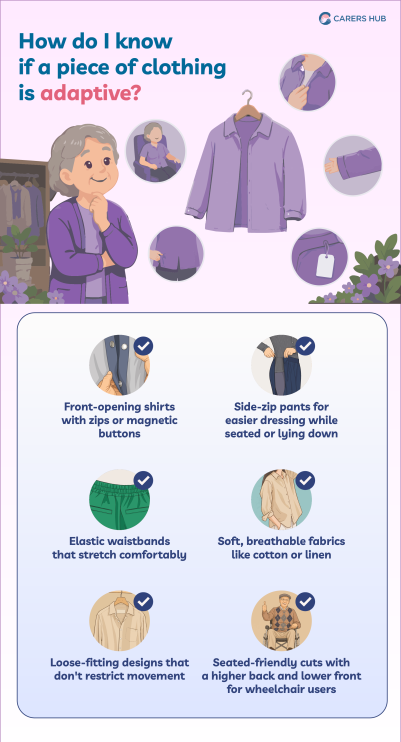
At its core, adaptive fashion refers to clothing specially designed for people with mobility limitations caused by age-related physical changes, chronic illnesses, or disabilities.
It modifies inconspicuous clothing details that we do not think twice about; items like metal zips and buckles that can cause discomfort, and when pressed for long hours on the skin, may cause possible pressure sores or elevated blood pressure without the wearer even being able to tell caregivers why. This makes Velcro and cleverly sewn clothing without metal pieces safer for this reason.
This type of clothing is designed to make the act of dressing safer, easier and more comfortable for people with mobility and physical limitations—and for the caregivers who are assisting them. Much can also be said about how those who need care deserve to look neat and well-taken care of; smart and respectable. At its best, adaptive clothing looks like everyday clothing, but includes thoughtful features such as side openings, snap fasteners, Velcro closures, higher waistbands and wider footwear etc.
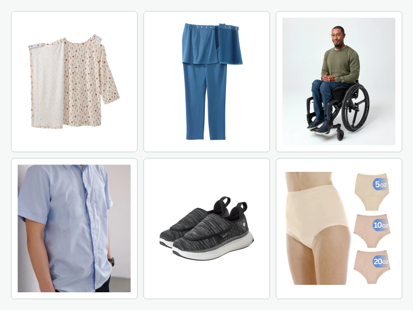
Examples of adaptive clothing featured in this article. Image sources: Silverts, IZ Adaptive, Will & Well and Amazon Singapore.
Today, adaptive clothing can be practical, dignified and presentable enough for daily life, family visits and outings. We've shortlisted a few brands offering adaptive clothing for seniors in Singapore. Below are some examples of adaptive clothing and related items that caregivers may find helpful.
Do note that while HNF doesn't officially endorse or sponsor any specific brands, we’ve included these suggestions as a helpful starting point. Feel free to use whatever brands suit you most.
1. Open-Back Tops and Bottoms
For a person who spends most of the day in bed, putting on a regular T-shirt may involve lifting the arms, rolling the body and pulling fabric over the head. Open-back tops and bottoms reduce the amount and extent of movements required. These usually open at the back or side, includes extra fabric for overlap tolerance and modesty, and are secured using Velcro or snaps. This allows the caregiver to position the garment more gently and cause less strain for the wearer.
They can be especially helpful for someone with severe weakness, pain, stiffness or reduced trunk control.
Example: open-back top and easy-open bottoms
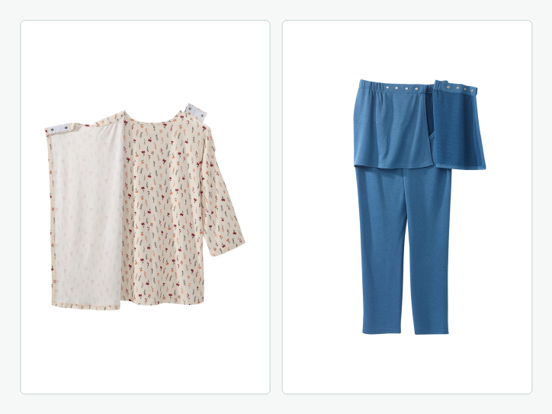
Actual products: Silverts open-back top and stretch-knit pants. Image source: Amazon Singapore
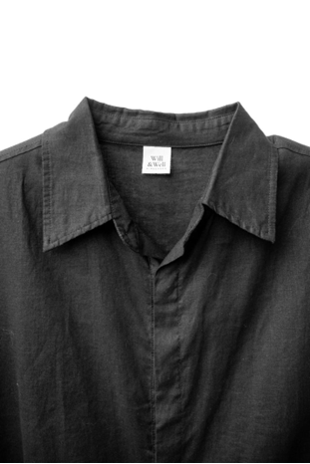
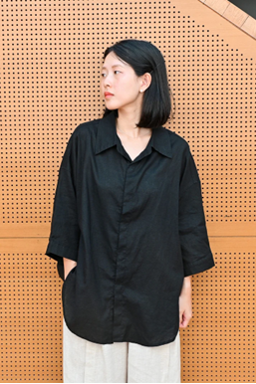
Photo credit: Will & Well
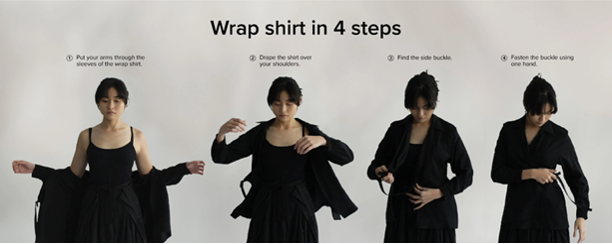
Photo credit: Werable

Where to purchase:
The Golden Concepts — Singapore-based adaptive-clothing retailer
Amazon Singapore — search for open-back adaptive tops or trousers
Ease in Motion - lightweight fabrics for tropical humid weather featuring roomy fits
Werable – custom-made designs to fit customer needs
Open-back tops and bottoms are available mainly through online retailers such as Amazon Singapore, Etsy Singapore, Taobao - 护理裤上衣 and Ubuy. Local adaptive clothing retailers such as The Golden Concepts and Will & Well also offer easy-dressing clothing and may provide suitable alternatives or customised alterations.
Availability, sizing and delivery charges should be checked before purchase.
Stock, sizes and international delivery charges may change. Search terms: “open-back adaptive top”, “assisted-dressing clothing” or “open-back trousers”.
2. Wheelchair-friendly trousers (seated-friendly cuts)
Standard trousers are usually designed for someone who is standing. When worn for long periods in a wheelchair, the waistband may sit too low at the back while the front bunches up or presses into the abdomen. Furthermore, if the wearer has difficulty moving their lower body or adjusting their sitting position on their own, caregivers may need to help lift or reposition them, sometimes by holding onto the top of their trousers.
Wheelchair-friendly trousers are shaped for a seated posture. These are also called seated-friendly cuts instead of standard cuts. The design may include a higher back rise to prevent skin exposure, a softer or lower front waist and smoother seams around pressure-sensitive areas to prevent bunching. Even when the design looks simple, the cut can make a noticeable difference to comfort while sitting and transfers.
Example: wheelchair-friendly trousers with a higher back waistband
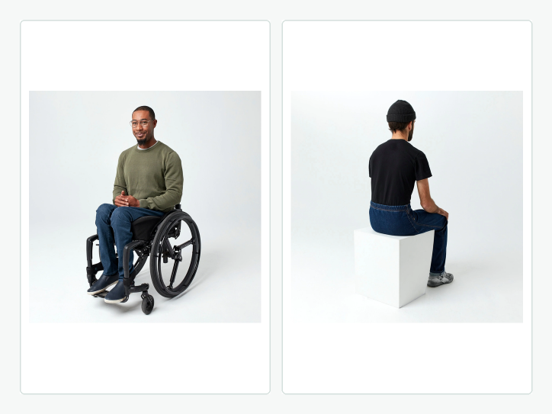
Actual product: Game Changer Seamless Back Jeans. Image source: IZ Adaptive.
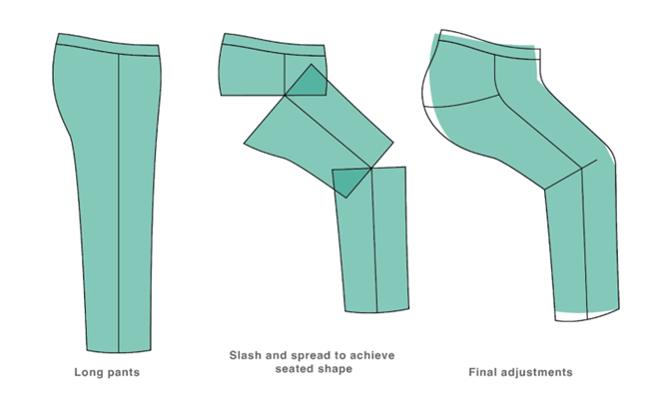
A diagram illustrating the excess fabric that is added to make adaptive pants that are suitable for wheelchair users.
Photo credit: Closetcorepatterns Blog
Where to purchase:
IZ Adaptive — seamless-back and wheelchair-friendly trousers
Silverts wheelchair clothing (via Amazon Singapore) — open-back and seated-dressing trousers
The Golden Concepts — local adaptive-clothing options
Check the size chart in the seated position. Useful terms include “wheelchair trousers”, “seamless-back pants” and “high-back seated trousers”.
3. Magnetic or Velcro button replacements
For users with weakness on the one hand, reduced finger dexterity, arthritis, tremors or difficulty coordinating small movements, caregivers can consider adapting a few garments first, like a familiar shirt or blouse, by replacing conventional buttons with magnetic fasteners, Velcro strips or larger easy-grip closures.
Traditional closures can be hard for weak or arthritic hands to pinch and align. Try magnetic buttons and velcro closures instead of traditional buttons and buttonholes. They are easy to close (lightly nudge or press them together) and open (just gently pull apart).
Example: magnetic and Velcro-style fastenings
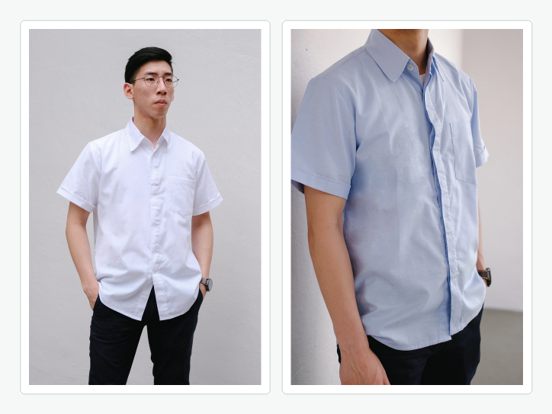
Actual product: Slim-Fit Short Sleeve Shirt with MagSnap closures. Image source: Will & Well.
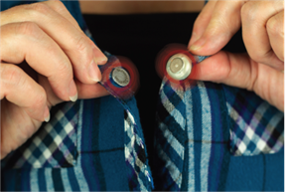
Magnetic buttons and velcro closures look like regular buttons.
Photo credit: DisabilityHorizons

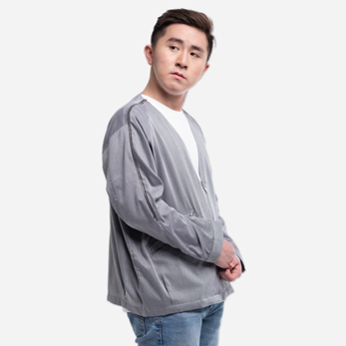
Photo credit: Singapore Fashion Runway / Singapore Fashion Runway


Where to purchase:
Will & Well — Singapore adaptive-fashion label with magnetic fastenings, including a button-up short-sleeve shirt and adaptive OneTee t-shirt
The Golden Concepts — stocks selected Will & Well adaptive garments
Neighbourhood alteration tailor — for adding Velcro, larger pulls or easy-grip closures. Some neighbourhood tailors have commented that they do not have big zippers in stock so best to check in with them.
Singapore Fashion Runway's Sustainable & Adaptive Fashion Collection - magnet-button shirts and front-zipper lightweight jackets
Bring a sample garment and explain the required opening clearly. Magnetic fasteners are not suitable for some implanted medical devices; check with the healthcare team when uncertain.
4. Wide-fitting and adjustable footwear
Swollen feet, curled toes, joint deformities, or reduced sensation can make ordinary shoes uncomfortable. Footwear with a wide toe box, extra depth and adjustable Velcro straps can provide more space and make shoes easier to put on.
For people who are still walking, look for footwear with a non-slip sole, a secure fit and adequate heel support. This is especially important for those who have balance difficulties or are at risk of falls.
For people who do little walking and mainly sit or transfer, easy-to-put-on, roomy footwear may be more practical. Closed-toe, adjustable footwear can also help protect the feet and toes while accommodating swelling. For example, closed-toe, clog-style shoes such as Crocs may be an option for people who need more space around the feet or toes.
Slip-on footwear can be convenient but may not provide enough support or stay securely on the foot for everyone. Consider the person's walking ability, balance, environment and usual activities when choosing footwear. For people who use stairs or escalators, footwear should fit securely and should not easily slip off or catch on surfaces.
Do not rely on the label “orthopaedic” alone. The real test is whether the shoe fits comfortably, reduces rubbing, and remains secure.
For people with significant swelling, foot deformities, reduced sensation or other complex foot-care needs, a podiatrist, physiotherapist, occupational therapist or doctor can advise on suitable footwear.
Example: wide-toe footwear with adjustable straps
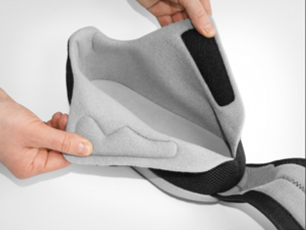
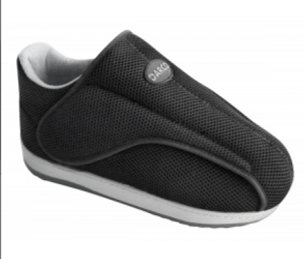
Actual product: Comfort Shoes with Easy Closures. Image source: RehabShop Singapore
Where to purchase:
Footkaki — extra-wide footwear and professional fitting
RehabShop Singapore — orthopaedic and adjustable footwear
SeniorCare — Velcro footwear for older adults
The ShoeCo. — orthotic-friendly shoes
Where possible, arrange an in-person fitting—especially when there is swelling, reduced sensation, diabetes, deformity or a history of pressure injury.
5. Reusable incontinence underwear
For individuals with mild urinary leakage who are still able to use the toilet independently or with assistance, reusable incontinence underwear may feel less bulky than disposable products.
It may also reduce long-term costs and provide a more familiar underwear-like appearance. Absorbency levels differ, so caregivers should match the product to the person’s actual needs.
Frequent change, proper washing, and regular skin checks remain essential.
Example: reusable absorbent underwear
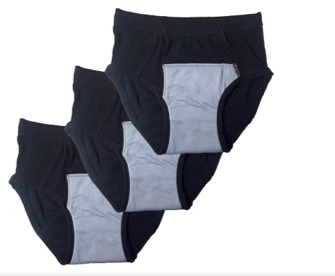
Actual product: 3-Pack Men’s Incontinence Underwear Cotton Regular Absorbency /Reusable Washable Urinary Incontinence Briefs 150ml pad
Image source: Amazon Singapore
Where to purchase:
Amazon Singapore — reusable incontinence underwear
Shopee Singapore — search across multiple sellers
The product is designed for urinary leakage, not only menstruation. Reusable underwear is generally more suitable for light leakage than full bladder voids.
6. Side-opening or wraparound trousers
Side-opening trousers can be particularly useful for people with severe stiffness, contractures, muscle spasticity or difficulty bending their hips and knees. Sliding pants up and zipping the front needs more balance and bending over.
Side zips are easier to close for seniors who have balance issues. These garments open along the sides using snaps, zips or Velcro, allowing the fabric to be positioned around the legs instead of pulled over them. They’re also more convenient for caregivers if you need to dress your loved one while they are seated or lying down, since you can unzip the pant leg all the way down instead of maneuvering each limb into the leg opening.
Because every person’s limb positioning and movement limitations are different, an occupational therapist can help advise on the most suitable design.
Example: wraparound trousers with side snaps
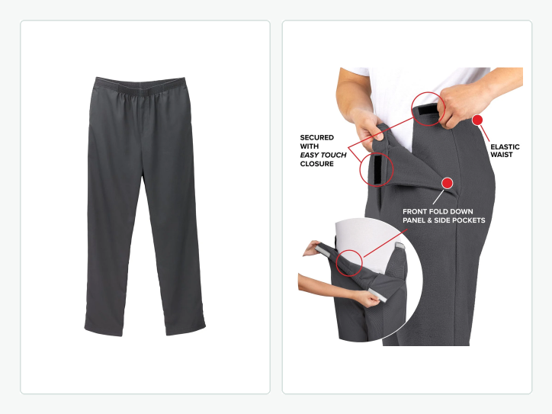
Actual product: Men's Easy Access Open Side Pant. Image source: Silverts via Amazon Singapore
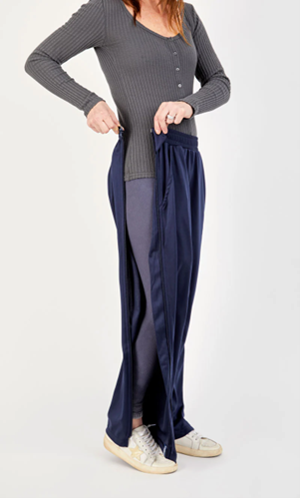
Side-zipped pants allow you to ‘open’ the pants all the way down the side, making it a bit easier to dress or change the diaper of your loved one while they are seated or lying down.
Photo credit: Befree
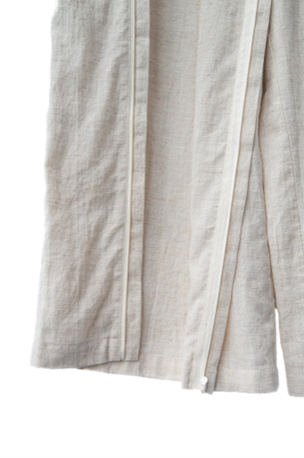
Photo credit: Will & Well


Where to purchase:
The Golden Concepts — local adaptive-clothing retailer
Silverts open-back pants (via Amazon Singapore)— assisted-dressing and open-back trousers
IZ Adaptive — adaptive trousers for limited mobility and wheelchair use
Amazon Singapore — search for side-opening adaptive pants
Will & Well – front-zip drawstring pants
Check whether the item opens fully or only partially, and whether snaps, zips or Velcro could press against the person’s skin or positioning supports
These small modifications to clothes help solve the daily challenges elderly people face when dressing, without sacrificing personal style.
Comfort, dignity and choosing the right clothing
Adaptive clothing can reduce discomfort and embarrassment while helping your loved one maintain their personal style and dignity.
Suitable clothing serves more than practical purposes. How your loved one chooses to dress themselves reflects and reinforces their self-confidence, mood, and social participation.
Seniors may not want to leave the house if they have to wear overly bulky, poorly-fitting clothes. If dressing becomes stressful, they may be deterred from going on outings because of the effort involved.
Adaptive clothing for the elderly can help them maintain their independence and personal identity, giving them the confidence to continue engaging with the people and activities they love.
Start with one or two items that address the main difficulty, such as fastening buttons, dressing while seated or managing swollen feet. Choose soft, breathable fabrics with secure closures and minimal seams.
Where possible, involve your loved one in selecting the colour, style and fit. For those at risk of pressure injuries, adaptive clothing should support—not replace—regular repositioning, skin care and professional advice.
A quick caregiver checklist
• What movement causes the most discomfort during dressing?
• Does the garment support toileting and continence care?
• Are there seams or fasteners pressing against the skin?
• Can the person still choose the style and colour they like?
• Would an occupational therapist’s advice be helpful?
Purchase information was checked in September 2026. Availability, pricing, delivery coverage and return policies may change; caregivers should verify these directly with the seller before ordering.
Important note
Product examples are provided for general information and do not constitute endorsement. Caregivers may wish to consult an occupational therapist, physiotherapist, nurse, podiatrist or doctor when choosing clothing for complex mobility, positioning, continence or skin-care needs.
Article prepared for Carers Hub. Product images are sourced from the respective retailers or manufacturers and are shown for editorial illustration only. Product designs and availability may change.
References:
https://www.e4aonline.com/understanding-home-caregiver-responsibilities/
https://www.alz.org/help-support/caregiving/daily-care/dressing-grooming
https://willandwell.com/blogs/the-media/mts-elisa-lim-gov-sg?srsltid=AfmBOopJN-_xRgKWBvpa4j4-3jBuoR_Q9H0oLXRBqW2dYcLcJnU7wvYe
https://www.theedgesingapore.com/options/style/werable-founder-claudia-poh-talks-adaptive-clothing-growing-business-and-future
https://www.sday.design/archive/2023/596.html
https://designsingapore.org/stories/claudia-poh-believes-adaptive-fashion-can-be-desirable-for-all/
You may also like

More Than a Bath - Home Bathing Service & Caregiver Support in Singapore
Senior Citizen Discounts and Benefits in Singapore: Dining