


 + points earned!
Moving Forward After a Diagnosis: Practical Steps for New Caregivers
- 18 September 2026
- Home Nursing Foundation
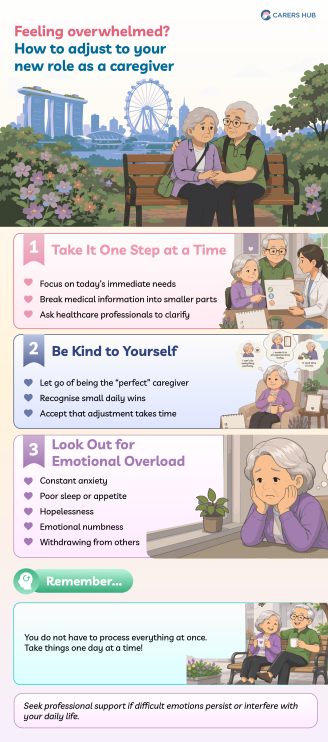
Processing a difficult prognosis is the first step. Adapting to life as a new caregiver is where the daily work begins, and having practical strategies in place can help make your transition more manageable.
In Part 1, we looked at why accepting difficult medical news is a gradual process, the signs of anticipatory grief, and how to gently navigate intense, conflicting emotions without judgment. Part 2 shares actionable tips on how to adjust to your new role as a caregiver, set realistic expectations, protect your personal well-being, and build a sustainable support system for the road ahead.
How can I better adjust to being a caregiver?
Focus on the here and now
When you are caring for a loved one, looking too far into the unknown future can easily trigger a wave of anxiety. It is important to remind yourself that you don't need to solve every potential problem or anticipate every what-if scenario today.
Instead, give yourself permission to focus on immediate concerns, such as what to cook, where to go, and how to organise current medications. By breaking your work down into manageable next steps, what may seem like a long and overwhelming journey can become something you feel capable of handling.
This guide is a useful starting point for what you should know as a new caregiver.
Plan your approach to managing information
Medical updates and care decisions often come all at once, whether it’s information from your doctor and nurse or financial aid information from caregiver support sources. To process them without burning out, break information into smaller, digestible pieces.
For example, you can use your phone to record audio as it is spoken to you and review it later. Or you could keep a master journal of all information related to care decisions and organise them by sections, so you know where to add or find information.
You can also refer to guides such as this one about common healthcare acronyms, to better help you understand medical information.
Don’t hesitate to ask healthcare professionals to pause, clarify, or repeat details until you feel comfortable.
Continue to nurture your daily life with inspiring activities
It’s important to help yourself stay grounded during uncertainty. Try to maintain simple daily routines, such as having your usual breakfast, making time for your favourite TV shows, or keeping a regular bedtime. These predictable moments offer a quiet sense of comfort and stability.
Beyond daily routines, try engaging in activities that energise and uplift you. Whether it’s learning to dance, chasing a personal best time in running, or experimenting with new recipes, doing what you love builds the mental resilience and joy you need to sustain yourself.
Don’t pressure yourself to be perfect
You may feel pressure to be the “perfect” caregiver for your parent, to be someone who always stays calm, knows exactly what to do, and has all the answers. But the truth is that you’re allowed to figure things out as you go, and you are allowed to make mistakes.
To relieve yourself of this pressure, it helps to set aside some short periods of time every day to rest your mind. It can be a five-minute moment of silence before you get out of bed every morning or stepping out of the house in the middle of the day to look outside.
Celebrate your small wins
We have a natural tendency to focus only on the negatives and overlook the positives, believing that our challenges or shortcomings eclipse the small things we’ve accomplished.
Try taking a moment each day to recognise your efforts, such as cooking a healthy meal that your loved one enjoyed, successfully administering medication, or simply ensuring they felt comfortable.
These moments matter because they showcase your personal efforts and resilience, and can give you the encouragement to keep going. You don’t have to master it all overnight. Just choosing to show up and do your best each day is a success in itself.
Adjusting to a new identity
Becoming a caregiver to your parent often changes the dynamics of family roles and relationships. You might find yourself transitioning from being a child to the primary decision-maker for their medical choices, daily lifestyle, and long-term financial planning. It could also involve taking on responsibilities that you’ve never prepared for.
Beyond daily tasks, this will also be an ongoing journey of understanding the deeper meaning of caregiving. While caring for a parent is an act of filial duty and love, pushing yourself out of pure obligation without taking care of your own well-being will quickly lead to emotional and physical depletion. Finding purpose in caregiving includes respecting your own limits, so you can continue to care with love rather than empty duty.
Throughout this journey, remember that learning to be a caregiver is a process that takes time, and it’s important to be patient with yourself.
How do I adjust to being a caregiver? Consider external support
If you notice these signs lasting for more than two months, please know that you don’t have to shoulder it all alone. Seeking help protects your well-being and helps you stay well enough to continue being there for your loved one.
Consider reaching out to people who can offer emotional and practical support for caregivers, including:
- Counsellors, therapists, and psychologists: They can help you safely process your emotions and develop healthy coping methods.
- Social workers: To help you with navigating resources, finding community support networks, and practical care solutions.
- Spiritual mentorship or pastoral care providers: To offer faith-based or spiritual guidance, comfort, and a listening ear if you are seeking meaning and peace during this transition.
- Caregiver support groups: Connect with other caregivers who can help you gently navigate your feelings and guide you along this journey. Search for a suitable caregiver support group from this list collated by the Agency for Integrated Care (AIC).
Unsure about the kind of support you need? Try this community mental health wayfinding tool by mindline to explore what suits you.
Acceptance doesn’t mean that you’re giving up hope. It simply means that you’re acknowledging the reality of the present, so you can provide the most meaningful care and support possible moving forward.
References:
https://whatsyourgrief.com/ambiguous-grief-grieving-someone-who-is-still-alive/
https://www.thecounsellingplace.com/blog/terminal-illness-loved-one-emotional-journey
https://www.verywellmind.com/denial-as-a-defense-mechanism-5114461
https://www.healthline.com/health/stages-of-grief
https://www.mayoclinic.org/healthy-lifestyle/stress-management/in-depth/caregiver-stress/art-20044784
https://www.hospiceuk.org/information-and-support/death-and-dying-what-expect/what-to-do-terminal-diagnosis
https://www.agingcare.com/questions/feel-helpless-and-hopeless-overwhelmed-with-dread-especially-during-the-holidays-any-advice-welcome-471529.htm
https://www.agingcare.com/questions/being-a-caregiver-is-like-riding-a-rollercoaster-full-of-emotions-when-you-care-for-your-parent-452867.htm
https://www.som360.org/en/monograph/grief/blog/anticipatory-grief-what-it-and-how-cope-it
https://www.healthline.com/health/repressed-emotions
You may also like

I Am Finding It Hard to Accept My Loved One's Diagnosis or Prognosis. What Should I Do?

Nutritious Meal Ideas for Seniors with Diabetes, High Blood Pressure, and Heart Disease
